

For most parents, news about head lice arrives without warning — usually in a note from the school nurse. By the time you spot the first itch, lice may have already moved between siblings and close friends. It feels stressful, but you are not alone, and this is manageable. A few simple habits added to your family’s routine can help prevent the spread of head lice at home and at school.
Getting ready for the first day back? Read our back-to-school lice guide for a quick, printable checklist of the items kids should never share.
Head Lice Spread Through Contact, Not Poor Hygiene
Start with the facts, because facts lower the panic. According to the CDC, lice cannot fly or hop. They spread mainly through direct head-to-head contact — the kind that happens during play, hugs, and group selfies. Sharing hats, brushes, and headphones can also cause the spread of lice.
An adult louse is about the size of a sesame seed. Having lice says nothing about how clean your home or your child’s hair is. The California Department of Public Health confirms that lice infest clean hair and dirty hair alike, and Mayo Clinic notes that school-age children face the highest risk simply because they play so close together.
Lice Defense Habits Kids Can Use at School

The strongest defense costs nothing. It is a set of habits your child can learn this week.
- Tie long hair up. Braids, buns, and ponytails shrink the surface lice can grab during play.
- Teach personal head space. Remind kids to keep their heads apart during huddles, selfies, and shared screens.
- Keep personal items personal. Hats, helmets, scarves, hairbrushes, combs, headbands, barrettes, scrunchies, sports uniforms, coats, headphones, and earbuds should never be shared.
Both the CDC and the California Department of Public Health list avoiding head-to-head contact as the best protection against lice. These habits also protect the teachers, coaches, and parents who spend their days close to kids.
Check for Lice Weekly and Catch It Early
A weekly head check is your early warning system. The American Academy of Dermatology recommends combing wet, conditioned hair with a fine-tooth comb to look for lice. Use a metal comb, work in small sections, and look behind the ears and at the nape of the neck. Good lighting makes nits much easier to spot. Our step-by-step guide to checking for lice walks through it.
Mayo Clinic notes that finding a live louse on the scalp is what confirms an infestation. Catching it early helps prevent the spread of lice through the rest of the household — treating one child in an afternoon beats treating everyone over several weeks.

Should Children Miss School if They Have Lice?
No child should miss class or feel embarrassed over lice. In its 2022 clinical report, the American Academy of Pediatrics discourages “no-nit” policies that keep children out of school, noting that a child with head lice has likely had them for weeks by the time they are found and poses little risk to classmates. Check your school’s policy, start treatment, and keep the day as normal as you can.
Keeping Lice Away After Treatment
Once lice find their way into a community, they tend to stick around. It is not unusual for lice to keep circulating after your child returns to school or camp — about 1 in 5 children experience a reinfestation after their initial lice removal.
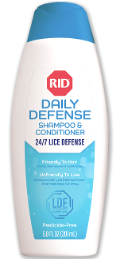
To help keep lice away from treated hair, a daily defense shampoo and conditioner such as RID® Daily Defense Shampoo & Conditioner cleans and conditions while providing ongoing 24/7 defense against lice with daily use. Browse all RID® lice products or learn more about Lice Defense.
Conclusion
Lice are common, treatable, and nothing to be ashamed of. Tie hair up, guard personal head space, keep hats and headphones personal, and check weekly. When lice show up anyway, act quickly, treat, and do a focused cleanup. Your family will be back to normal fast — and you will be ready next time.
Sources
- Centers for Disease Control and Prevention. About Head Lice. https://www.cdc.gov/lice/about/head-lice.html
- Centers for Disease Control and Prevention. Clinical Care of Head Lice. Updated January 31, 2025. https://www.cdc.gov/lice/hcp/clinical-care/index.html
- Nolt D, Moore S, Yan AC, Melnick L; American Academy of Pediatrics. Head Lice. Pediatrics. 2022;150(4):e2022059282. https://publications.aap.org/pediatrics/article/150/4/e2022059282/189331/Head-Lice
- Mayo Clinic. Head Lice: Symptoms and Causes. https://www.mayoclinic.org/diseases-conditions/head-lice/symptoms-causes/syc-20356180
- Mayo Clinic. Head Lice: Diagnosis and Treatment. https://www.mayoclinic.org/diseases-conditions/head-lice/diagnosis-treatment/drc-20356186
- California Department of Public Health. CDPH Guidance on Head Lice Prevention and Control for California Schools. https://www.cdph.ca.gov/Programs/CID/DCDC/CDPH%20Document%20Library/SchoolGuidanceonHeadLice.pdf
- California Department of Public Health. Common Myths and Facts About Head Lice. https://www.cdph.ca.gov/Programs/CID/DCDC/CDPH%20Document%20Library/HeadLiceMythsFacts.pdf
- American Academy of Dermatology. Head Lice: Diagnosis and Treatment. https://www.aad.org/public/diseases/a-z/head-lice-treatment
This content is provided for informational and educational purposes only and is not a substitute for professional medical advice. Always read and follow product label directions. Consult a healthcare provider with any questions about diagnosis or treatment. RID® is a registered trademark of Oystershell Consumer Health, Inc.